
AI tools now offer faster ways to check how stress may be affecting your daily life. A stress level test AI can turn your recent habits and symptoms into a score you can track over time.
Used correctly, it helps you notice patterns you might ignore, like sleep disruption, overload, and constant tension.


This guide explains what these tests measure, what they are used for, and how to interpret results without treating them like a diagnosis.
What An AI Powered Stress Level Test Is And What It Is Not
An AI powered stress test is a digital assessment that estimates stress strain using your answers and, sometimes, optional device data.
The output is usually a score, a category range, and a short list of likely drivers that influenced the result.

You should view it as screening-style feedback, not as a clinical conclusion or a replacement for professional care. The real value is that it gives you a consistent check in a format you can repeat across weeks.
What The Test Measures In Practical Terms
Most tools measure perceived stress signals such as sleep quality, mental overload, irritability, and difficulty focusing.
You may also see prompts about physical tension, motivation drops, or how often you feel rushed. The score reflects how your answers match patterns commonly linked to stress, so it is an estimate rather than a direct measurement.
The most useful takeaway is pattern awareness, because it helps you connect daily habits to how you feel.
Where The Data Comes From
These tests typically use rating scale questions, short checklists, or guided prompts that convert your responses into a score.
Some include open ended questions, then analyze your words for themes like urgency, rumination, and worry language. A smaller group allows wearable inputs such as sleep duration or activity patterns, but those signals still need context.
If you want a stable baseline, consistent inputs matter more than adding extra data streams that fluctuate.
What It Cannot Diagnose or Confirm
A stress score cannot diagnose anxiety, depression, burnout, or any medical condition, even if it looks detailed. It also cannot confirm the root cause of your stress, because many factors can produce similar symptoms.
Some people mistake a high score for proof that something is “wrong,” which increases worry and reduces clarity. A safer mindset is not a diagnosis, so you use the result to guide decisions instead of accepting it as final.
How AI Estimates Stress From Your Signals
AI stress tests rely on correlations between your inputs and common stress patterns, not on a single biological marker.

The system combines answers, timing, and sometimes your prior check-ins to estimate a likelihood score. When the tool explains what influenced your result, the score becomes easier to use and less likely to mislead you.
The key to responsible use is remembering probability, not certainty, even when the output looks precise.
How Text Analysis Can Shape A Score
If the test includes written answers, the AI may detect patterns like negative framing, time pressure, repeated worry themes, and references to sleep loss.
It can also flag language that suggests overload, conflict, or lack of control, depending on the model’s design.
This is pattern matching, not mind reading, and writing style can skew results if you use dramatic language casually. To reduce distortion, aim for clarity and consistency because word choice can shift scoring even when your stress level is similar.
How Wearables Can Help And Also Mislead
Wearables can support interpretation by adding sleep timing, rest patterns, and activity consistency, which often shift during stressful periods.
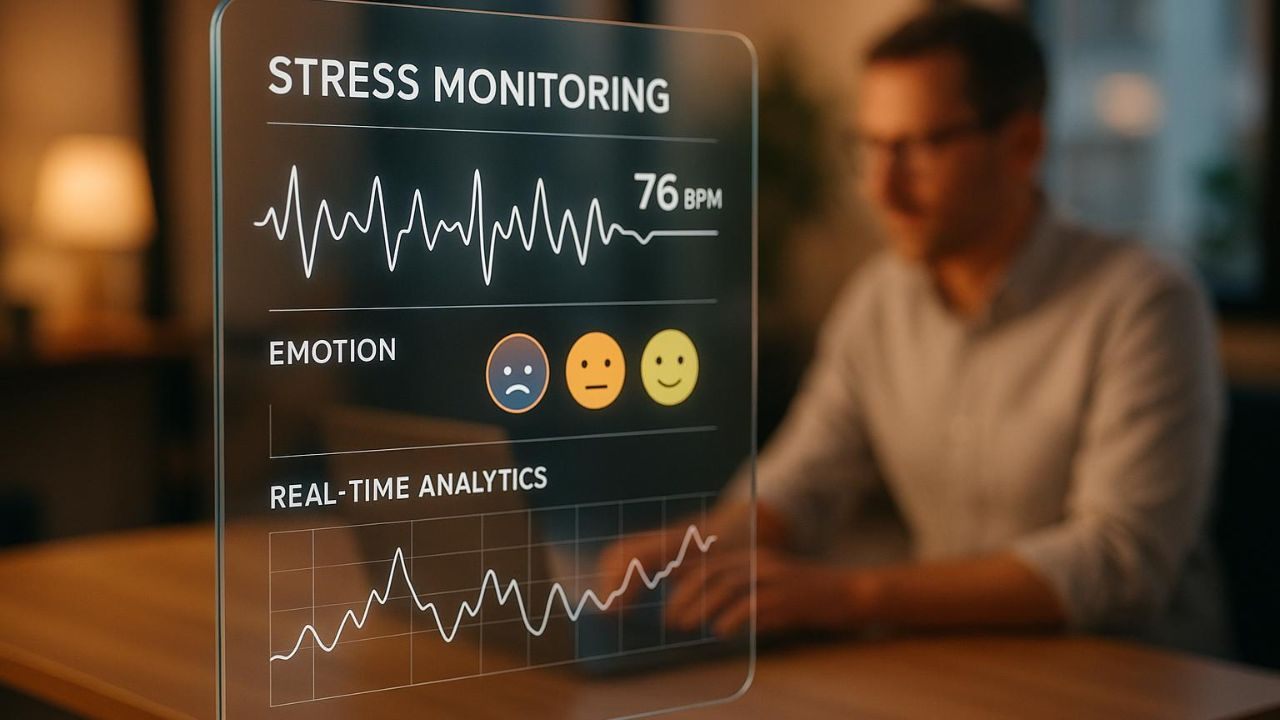
Some systems also use heart rate-related trends as a stress proxy, especially when paired with sleep disruption signals.
However, these signals can change due to exercise load, caffeine, alcohol, illness, or travel, so they are not stress-exclusive. Treat wearable signals as supporting context and compare them with what your week actually looked like.
Why Trends Matter More Than A One Time Result
A single score can spike after a rough day, a deadline, or a short night of sleep, even if your overall stress is not rising. Trend tracking reduces noise because repeated check-ins show whether stress is consistently climbing, stabilizing, or improving.
Many tools highlight weekly movement and recurring drivers because that is easier to act on than a one-day number. If you want meaningful insight, focus on direction over time instead of reacting to a single result.
How To Take The Test For More Reliable Results
The goal of a stress test is accuracy, not a “good” score that makes you feel better in the moment.

You get more reliable results by keeping timing consistent, answering with real examples, and avoiding extreme situations that distort your baseline.
When you do this, your score becomes a useful signal rather than a mood trigger. In practice, consistency beats perfection, because stable testing conditions produce comparable results you can trust.
Choose A Consistent Time And Setting
Take the test at a consistent time of day each session, such as early evening, so your energy level is comparable. Avoid taking it immediately after conflict, a high-pressure meeting, or a stressful commute, because those moments can inflate your score.
If you are sick or severely sleep deprived, postpone the test to avoid mixing illness signals with stress signals. Add a short note, like sleep hours and workload, to help you interpret changes later.
Answer With Concrete Evidence, Not Ideal Replies
Base your answers on the last one to two weeks rather than only how you feel right now. Use concrete evidence like missed breaks, constant multitasking, shortened sleep, or difficulty winding down at night.
Avoid answers that sound “healthy” but do not match your reality, because that reduces the value of tracking. The best output comes from honest, repeatable inputs, since the tool can only detect patterns you actually report.
Retest At A Frequency That Avoids Overthinking
Testing too often can create anxiety and can make normal daily variation feel like a problem you must fix immediately.
Weekly or biweekly check-ins are enough for most people to see trends without obsessing over noise.
If you are testing new habits, weekly results can show whether changes like better sleep hygiene are helping. If life is stable, monthly check-ins may be sufficient because steady monitoring is more useful than constant checking.
How To Interpret The Score Without Overreacting
A stress score should be interpreted alongside real-life outcomes, including how you sleep, focus, recover, and handle everyday demands.

The number matters less than the drivers listed and whether they match your lived experience. When interpretation is done well, the score supports small, realistic adjustments rather than panic.
A good approach is to treat the score as a decision aid, not a label, and to look for practical actions you can sustain.
Understand Ranges, Confidence, And False Positives
Many tools categorize results as low, moderate, or high, sometimes with a confidence note or a driver list.
A high score can be a false positive if you took the test on an unusually hard day or rushed through prompts. A low score can also be misleading if you minimize symptoms or have normalized constant pressure.
Cross-check the result with sleep quality, patience, focus, and tension, because false positives can happen in any estimation system.
What To Do If Your Score Is Higher Than Expected
Start by checking context, including whether you took the test after a conflict, poor sleep, or a heavy workload day.
Then compare the score with how you have felt across the last two weeks, not just the day you tested.
Review the drivers listed, then pick one small change to test for seven days, such as an earlier wind-down time or protected breaks. Treat the next step as an actionable adjustment rather than self-criticism or a reason to worry.
Turn Results Into A Simple Weekly Plan
Choose one driver to target, such as sleep consistency, workload boundaries, or recovery time, and keep the change measurable.
This is where a measurable change helps, because it gives you a clear baseline you can compare week to week.
Track outcomes that matter, including energy, focus, and mood stability, because they show real progress. If the score improves but you feel worse, prioritize better daily function and reconsider how much weight you give the tool.
Conclusion
A stress test can help you notice patterns that are hard to see when you are busy and running on autopilot. A stress level test AI works best as a structured check in that supports tracking and practical decisions, not as a medical judgment.
If you take it consistently and interpret it alongside your daily functioning, you can use the results to guide small changes that you can maintain. When the tool makes you anxious or confused, step back and use simpler tracking methods that keep you grounded.