
The cost of a mobile phone can be a hurdle for many low-income individuals and families. Reliable phone access is crucial for daily living, job searches, and staying in touch.
The Lifeline program aims to bridge this gap. Both urban and rural residents across the United States may qualify.



This guide helps clarify eligibility, paperwork, and the application steps. It’s written for anyone who feels unsure about qualifying. The information is detailed and actionable.
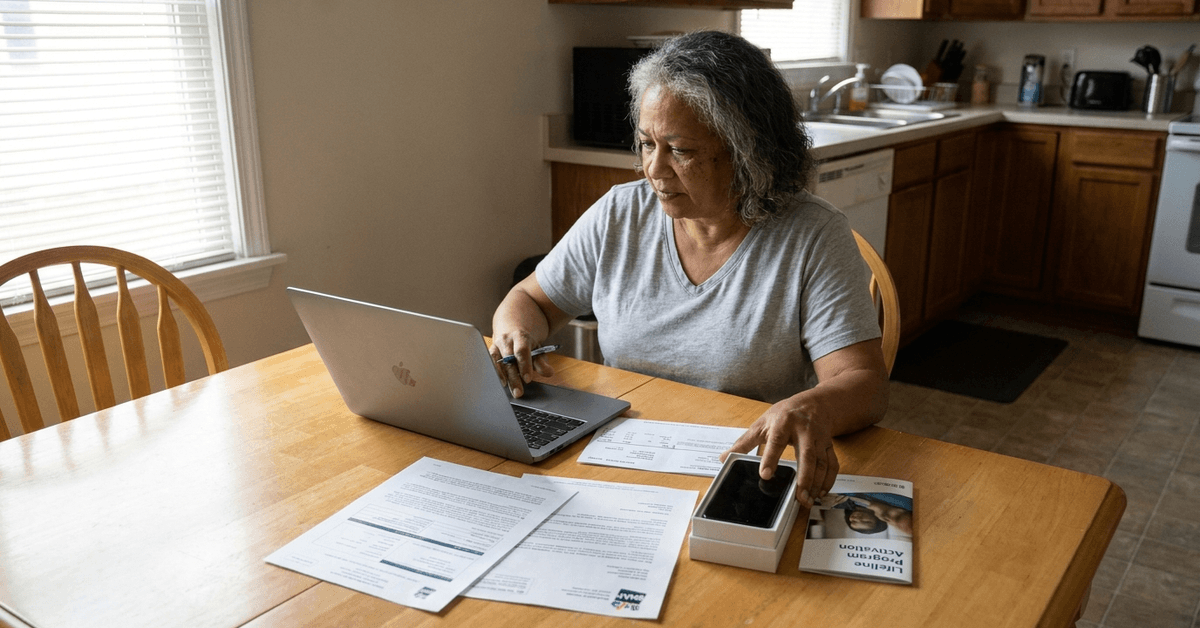
What Is the Lifeline Program?
Lifeline is a federal assistance initiative providing discounted phone or internet services to low-income Americans.
This includes individuals living in major cities like Los Angeles, Dallas, or Chicago, as well as rural communities.
The main benefit is a free or heavily discounted phone plus monthly cellular service. It’s overseen by the FCC, so the rules are consistent nationwide.
Who Qualifies For a Lifeline Free Phone?
Eligibility often hinges on participation in specific federal or state benefit programs. But there are income-based qualifications too.
Program-Based Eligibility
- Supplemental Nutrition Assistance Program (SNAP)
- Medicaid
- Federal Public Housing Assistance
- Supplemental Security Income (SSI)
- Veterans Pension & Survivors Benefit
One qualifying program is enough for approval.
Income-Based Eligibility
If not enrolled in a listed program, another route is to meet low-income thresholds. Your household income should be at or below 135% of the Federal Poverty Guidelines.
Guidelines are updated yearly by Health & Human Services (HHS). Larger households have higher thresholds.
Check the latest figures on the USAC website before applying.
Essential Documents Needed
Documentation is required to confirm both identity and eligibility. This applies everywhere, from Phoenix, Arizona to Boston, Massachusetts.
- Photo ID (driver’s license or similar)
- Proof of income: pay stubs, tax return, or award letter
- Proof of qualifying benefits: SNAP, Medicaid card, or letter
- Social Security Number (last four digits) or Tribal Identification (for Native American applicants)
Gathering these before starting the application helps prevent delays.
Applying for the Lifeline Free Phone Program
The process varies slightly by state, but most follow a similar path. Completing all steps accurately improves chances for quick approval.
Step 1: Check Your Eligibility
The first step is reviewing the above criteria. Determine if you qualify through income or a benefit program.
Step 2: Select a Participating Lifeline Provider
Major national carriers are part of the program. Some leading names include Assurance Wireless, Safelink Wireless, and Q Link Wireless.
Other local providers might be available in smaller cities or states. Each has unique phone models and package offerings.
Step 3: Submit an Application
Applications can be submitted:
- Online via the National Verifier portal (the USAC Lifeline Support site)
- Directly with your chosen carrier’s website
- Mail (download and send forms if online is not possible)
Include every required document with your submission. Incomplete apps are a common cause of delay.
Step 4: Verification and Approval
The system may instantly verify you using federal databases. If not, additional proof may be requested.
If your initial paperwork is accepted, approval often follows within a few business days.
Step 5: Receive Your Free Phone and Start Service
Once approved, shipping takes several days. Many get basic Android phones, while certain areas may offer iPhones or other models.
When your device arrives, set up service using included instructions. Customer support can assist if any step is unclear.
States and Cities Where Lifeline Phones Are Available
Lifeline is offered in all 50 states, D.C., and Puerto Rico. Coverage depends on individual providers.
Popular cities where Lifeline phones are common:
- New York City
- Houston
- San Antonio
- Philadelphia
- Baltimore
- Seattle
Smaller towns and rural counties also have access through regional carriers.
Choosing the Right Lifeline Provider
The top names in the space often include:
- Assurance Wireless
- Q Link Wireless
- Safelink Wireless
- Life Wireless
- enTouch Wireless
Coverage, phone models, and customer reviews all vary. It’s wise to check local coverage maps before applying.
What to Expect: Phone Features and Service Limits
Lifeline phones usually cover basic calling, text messaging, and a mobile data allowance each month.
Expect common features like touch screens and Android OS. Some models may be Wi-Fi only until the first plan month is activated.
- Unlimited minutes and texts are common
- Data limits typically range from 2GB to 8GB monthly
- Plans may include voicemail, 3-way calling, and caller ID
International calling is rare and may cost extra. Upgrades for more data could be available at a discount.
Renewals, Changes, or Loss of Service
Continued eligibility is checked annually. Each year, recertification is required to avoid disruptions in service.
Switching providers is allowed, though rules differ between carriers. Reporting address or income changes promptly is important.
Common Issues and Practical Tips
Application errors or missing documents are the main sources of delay. Double-check forms before sending.
- Always use matching legal name as shown on ID
- Save digital copies of application and documents
- Track your order status online if possible
When in doubt, local community organizations such as social service agencies can provide in-person assistance.
Common Questions About Lifeline Phone Assistance
Understanding Lifeline phone assistance can raise questions about eligibility, participating providers, application steps, available devices, service limits, and renewal requirements.
Can I get more than one free phone per household?
No. Lifeline limits service to one benefit per household, not per person.
What if my income changes during the year?
Notify your provider as soon as possible. Failure to update can result in service suspension.
Is it possible to use my old phone with Lifeline?
Many carriers allow bringing a compatible device. Confirm with your chosen provider first.
Conclusion: Taking Advantage of Lifeline Benefits
The Lifeline program offers crucial phone access for many Americans facing financial hardship. The process may seem detailed at first, but staying organized with paperwork and provider choice simplifies everything.
From applying online to annual renewal, each step benefits from careful attention and using accurate information. Those committed to following the procedure often find phone access can become reality within weeks.
The impact on daily life cannot be overstated. With a free phone and reliable connection, staying in touch with family, employers, and emergency services is far more achievable, regardless of income. Exploring Lifeline is a practical solution worth considering for anyone who qualifies.