
The World Health Organization recognizes burnout as an occupational phenomenon linked to unmanaged workplace stress.
It is not classified as a medical disease and should not be treated as a standalone diagnosis.



Any burnout test should therefore be used as a structured reflection tool, not as a clinical verdict.
What a Burnout Test Is Designed to Do
A burnout test helps identify patterns of stress-related strain connected to work roles.
It focuses on recurring experiences rather than isolated bad days.
The purpose is to highlight risk areas that may require changes in workload, support, or recovery.
Results are most useful when they inform decisions rather than label a person.
Core Dimensions Used in Reliable Burnout Models
Most research-based burnout frameworks measure multiple dimensions instead of a single score.
The World Health Organization outlines three core components tied to occupational burnout.
These dimensions help separate temporary fatigue from sustained work-related strain.
Understanding each dimension improves the interpretation of self-assessment results.
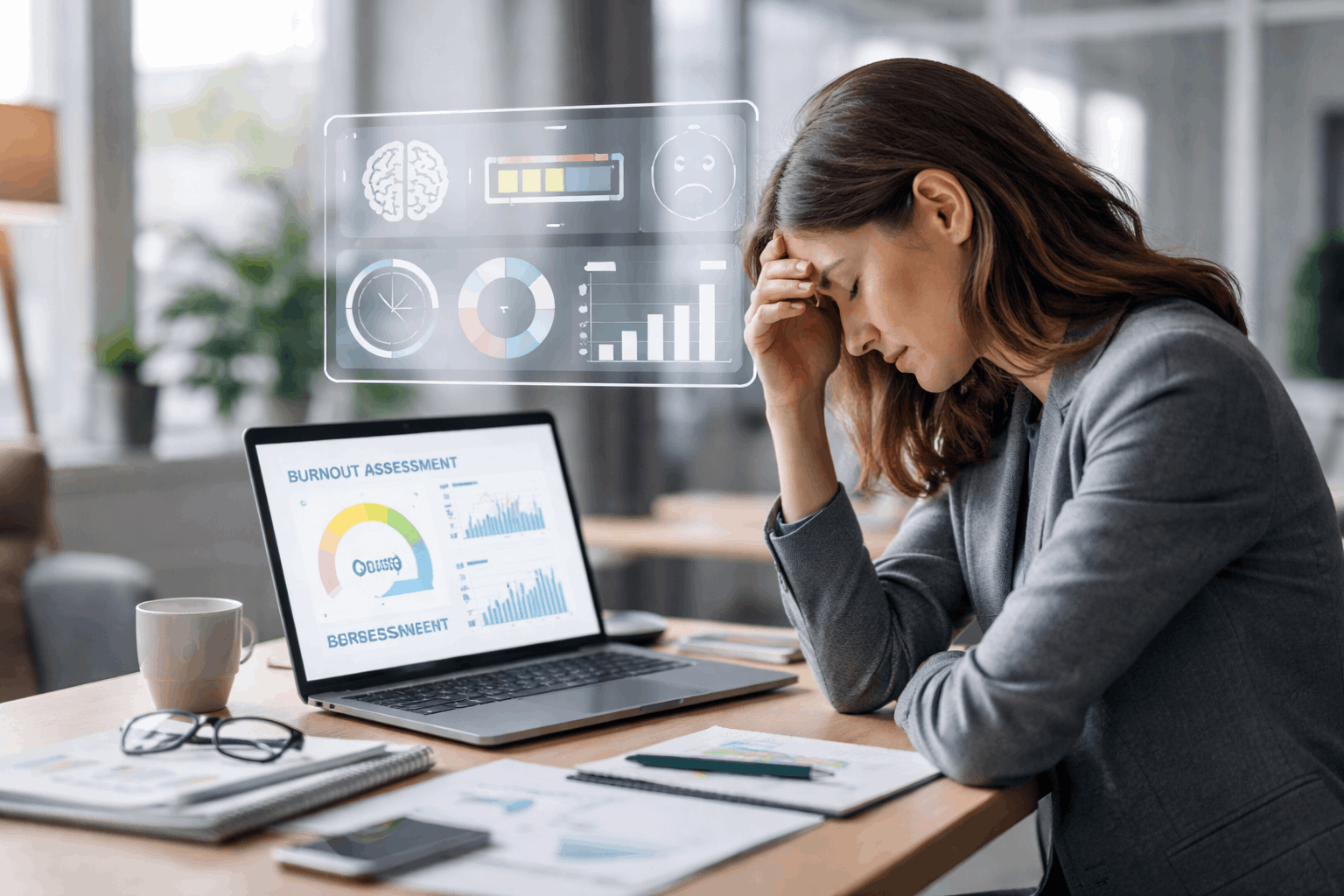
Exhaustion as Energy Depletion
Exhaustion refers to persistent physical and mental fatigue caused by prolonged stress.
It often appears as reduced stamina, slow recovery, and constant tiredness.
This dimension reflects how work demands exceed available energy over time.
Cynicism and Mental Distance
Cynicism describes emotional distancing or negative attitudes toward work.
It may include detachment, irritability, or loss of engagement.
This response often develops as a coping mechanism when stress feels unavoidable.
Reduced Professional Efficacy
Reduced efficacy involves feeling ineffective or unproductive at work.
It can distort self-evaluation even when objective performance is adequate.
This dimension reflects how stress interferes with confidence and perceived impact.
Established Burnout Assessment Frameworks
Several validated tools are commonly referenced in burnout research. These tools are used in academic, clinical, and organizational settings.
They measure similar dimensions while differing in structure and emphasis.
Understanding them helps distinguish credible assessments from unreliable ones.
Maslach Burnout Inventory Overview
The Maslach Burnout Inventory is one of the most cited burnout measures. It assesses exhaustion, cynicism, and professional accomplishment.
It is a licensed instrument and should not be copied informally.
Oldenburg Burnout Inventory Overview
The Oldenburg Burnout Inventory focuses on exhaustion and disengagement. It includes both positively and negatively worded items.
This structure helps reduce response bias in self-reporting.
Copenhagen Burnout Inventory Overview
The Copenhagen Burnout Inventory separates burnout into personal, work-related, and client-related domains.
It is often used in professions involving direct service or care. This separation helps clarify where the strain is primarily coming from.
How AI-Based Burnout Self-Assessments Function
AI-based self-assessments typically guide users through structured questions. They organize responses into predefined burnout dimensions.
Well-designed tools avoid diagnostic language and focus on risk patterns. Transparency about limits and methods is essential for responsible use.
Appropriate Role of AI in Burnout Screening
AI can improve consistency and reduce skipped questions during self-assessment.
It can summarize trends that may be hard to see manually. AI should not determine diagnoses or dismiss serious symptoms.
Human judgment remains essential when results indicate significant distress.
Running a Simple Burnout Self-Assessment
A basic burnout self-check can use a short rating scale for consistency. Responses should reflect the past one to two weeks.
Quick, instinctive answers tend to be more accurate than overanalysis. The goal is awareness, not perfection.
Exhaustion Check
Consider how often work leaves you physically or mentally drained. Notice whether rest feels insufficient for recovery.
Persistent fatigue across days may signal overload.
Cynicism Check
Reflect on your emotional response toward tasks and colleagues. Notice avoidance, irritability, or emotional withdrawal.
These reactions often indicate rising mental distance.
Efficacy Check
Assess whether you feel capable and effective in your role. Notice self-doubt that persists despite normal performance.
This pattern can reflect stress-related erosion of confidence.
Interpreting Results Carefully
Each burnout dimension should be viewed separately. High scores in one area suggest different actions than high scores across all areas.
Patterns matter more than absolute numbers. Short-term spikes are less concerning than sustained elevations.
Common Burnout Profiles
Some people show high exhaustion but remain engaged. Others feel disengaged without extreme fatigue.
Different profiles require different responses.
High Exhaustion Patterns
High exhaustion often reflects excessive workload or insufficient recovery. Rest alone may not resolve the underlying cause.
Work structure changes are often necessary.
High Cynicism Patterns
High cynicism often points to a lack of control or value conflict. It is less responsive to surface-level wellness strategies.
Addressing fairness and autonomy is usually more effective.
High Reduced Efficacy Patterns
Highly reduced efficacy may indicate unclear expectations or missing resources. Support, feedback, and training can help restore confidence.
This pattern is often reversible with targeted changes.
Limits of Self-Assessment Tools
Self-assessments rely on personal perception. They cannot fully account for mental health conditions with overlapping symptoms.
Burnout shares features with depression, anxiety, and sleep disorders. Professional evaluation is important when symptoms intensify.

Privacy Considerations for AI Tools
Burnout tools may collect sensitive personal data. Users should review data storage and sharing policies.
Minimal data collection reduces privacy risk. Transparency is a key marker of responsible design.
Workplace Use and Caution
Employer-provided burnout tools vary in confidentiality. Employees should understand how results may be used.
Burnout data should support well-being, not performance monitoring. Clear boundaries protect trust and participation.
What to Do After a Burnout Self-Test
Choose one high-risk area to address first. Focus on small, testable changes rather than sweeping reforms.
Document stressors if workplace changes are needed. Escalate concerns if symptoms persist.
When to Seek Professional Support
Seek help if work stress affects daily functioning. Professional guidance is important when symptoms worsen.
Self-tests are not substitutes for care. Early intervention improves outcomes.
Examples of Tests
Here’s a clear, reliable list of burnout-related tests and self-assessments, with short explanations and notes on credibility and use.
1. Maslach Burnout Inventory (MBI)
The most widely cited burnout assessment in research and workplaces.
Measures emotional exhaustion, cynicism/depersonalization, and professional efficacy.
Licensed tool, typically used by organizations, researchers, or clinicians.
2. Copenhagen Burnout Inventory (CBI)
Separates burnout into personal, work-related, and client-related burnout.
Frequently used in healthcare, education, and service professions.
Openly available and commonly referenced in academic studies.
3. Oldenburg Burnout Inventory (OLBI)
Focuses on exhaustion and disengagement.
Uses both positively and negatively phrased questions to reduce bias.
Popular in occupational psychology research.
4. Shirom–Melamed Burnout Measure (SMBM)
Emphasizes physical fatigue, emotional exhaustion, and cognitive weariness.
Often used in stress and occupational health studies.
Less common in workplaces but strong in research contexts.
Final Perspective on AI-Based Burnout Tests
Burnout tests are most useful as structured mirrors. AI can organize insight, but should not replace judgment.
Sustained high scores point to the need for real change. Awareness becomes valuable only when followed by action.