
When unexpected expenses arise, many Filipinos look for financial options that are trustworthy and accessible. The SSS Salary Loan in the Philippines provides a practical solution for members who need fast funds.
This article explores how the loan works, its eligibility requirements, and the ways it can help during financial gaps. If you’ve ever wondered about SSS loans or are searching for flexible funding, you’ll find helpful insights throughout.


What Is the SSS Salary Loan?
The SSS Salary Loan is a benefit provided to active Social Security System (SSS) members in the Philippines. Its main purpose is to offer short-term credit for salaries, emergencies, or everyday expenses.
Although it is not a long-term financial solution, it gives users a safe way to address money needs without resorting to unregulated loan sharks.
Who Can Avail of the SSS Salary Loan?
Eligibility for the SSS Salary Loan is limited to members who meet specific criteria. Applicants are typically employed, voluntary, or self-employed contributors.
Qualifying members need to have made at least 36 monthly contributions, with six months of these within the most recent year before applying. It’s worth noting that an active SSS membership is a must, since lapses in contributions may delay the process.
Active Contribution Status
Members who actively pay their SSS dues on time and in full are more likely to get their applications approved smoothly. Perhaps some people find the regularity daunting, but consistent payments can really pay off in times of need.
Employer’s Role
Employed members need their employer to certify the loan application. This part sometimes takes longer, depending on a company’s internal process or paperwork backlogs. It’s sometimes overlooked, but employer participation can be vital.

No Outstanding SSS Loan
Applicants must not have any unpaid or overdue SSS loans. Members with prior balances must settle these first before taking a new salary loan. Missing this step could result in a rejected application or longer waiting times.
How Much Can You Borrow?
The loan amount depends on a member’s total paid contributions and average monthly salary credit (AMSC).
Typically, qualified members can borrow an equivalent of one or two months of their salary credit. The calculation is standardized, though sometimes members feel it’s a bit lower than expected. The SSS determines the exact value using verified records.
One-Month Salary Loan
This is available for members with at least 36 monthly contributions. The maximum loan usually equals the average salary credit over the past twelve months, or the amount needed—whichever is less.
Two-Month Salary Loan
If someone has at least 72 total contributions, a two-month salary loan becomes available. This essentially doubles the one-month amount, although the member’s salary credits and payment record still affect the approved amount.
How to Apply for an SSS Salary Loan
The SSS now allows different application channels. Members can use the online portal, mobile app, or visit their nearest SSS branch.
Requirements for submission usually include the SSS number, at least one government-issued ID, and a properly filled-out application form. These choices make it a little easier for people with varying levels of tech comfort.
Online and Mobile Application
With the SSS online portal (“My.SSS”), members log in and fill out the application. Required information includes membership status, employer details (if employed), and the desired loan amount.
Many find this option convenient, though a few still prefer in-person discussions.
Manual Submission at SSS Branch
Paper applications are accepted at SSS offices nationwide. Though it may seem more time-consuming, some applicants find reassurance in doing things face to face. If an applicant is employed, the employer’s certification is processed manually as well.
Processing Time and Loan Release
Processing times vary. Online applicants with verified accounts often get results faster, sometimes within three to five business days. In-person and mailed applications may take longer due to additional checks.
Funds are typically released through the SSS Unified Multi-Purpose ID (UMID) card, a nominated bank account, or through check, depending on preference and availability.
Modes of Disbursement
- UMID Card (if enrolled as ATM)
- Bank transfer to enrolled account
- Physical check (least preferred nowadays)
Some members experience brief delays, especially around holidays or cut-off cycles. It is normal to worry if the money hasn’t posted right away, but SSS has gradually improved turnaround times in recent years.
Loan Repayment Terms and Interest Rates
The SSS Salary Loan is intended for short-term repayment. The standard loan period is 24 months (two years).
Members generally repay via monthly salary deductions (for employees) or direct payments through SSS partners (for voluntary or self-employed members).
The interest rate is currently set at 10% per year based on diminishing principal balance. Some find the rate competitive, especially compared to informal lenders.
Penalties for Late Payment
Late payments incur a 1% penalty per month on unpaid balances. While this seems minor at first, penalties can add up quickly. Members sometimes overlook this detail, only to be surprised by heavier payback amounts.
Payment Channels
Payment is accepted through partner banks, SSS branch counters, and authorized remittance centers. For digital payments, SSS has expanded partnerships, but access may still depend on location or tech features.
Common Uses of the SSS Salary Loan
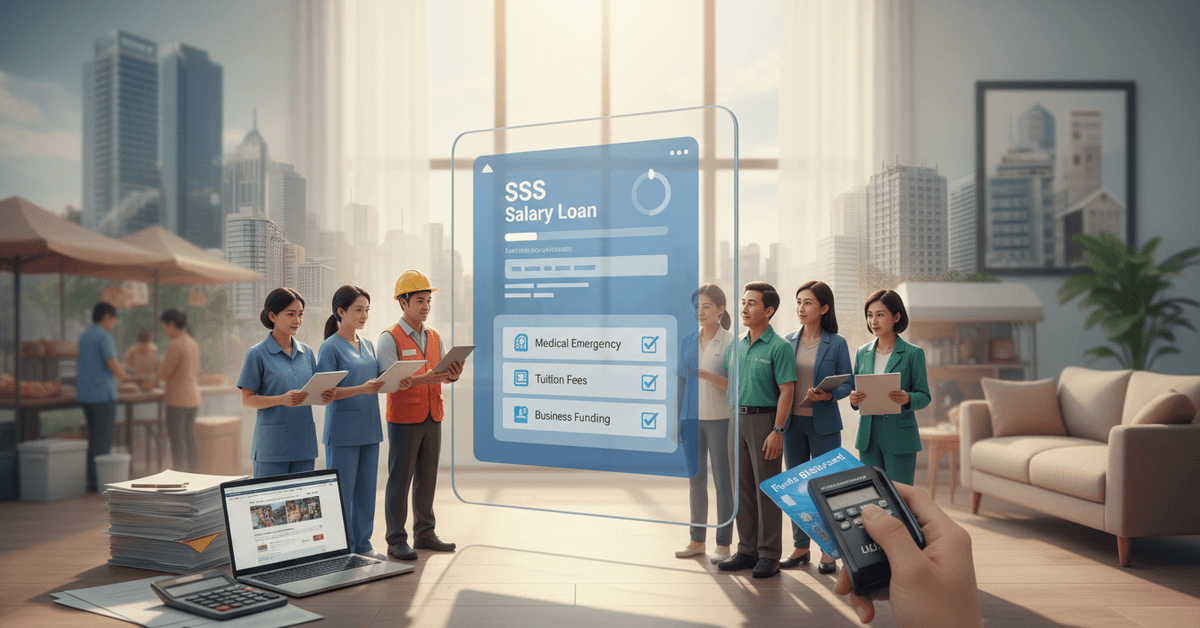
SSS Salary Loans serve multiple practical purposes. Many members borrow for emergencies—medical bills, education needs, home repairs, or temporary job loss. For others, the loan covers basic family expenses, especially when paychecks are delayed or reduced.
- Medical emergencies and hospital bills
- Major family expenses (e.g. tuition, home repairs)
- Temporary unemployment or lost income
- Bridge funding for small businesses
Interestingly, a few people use the loan as a buffer during school enrollment or after weather-related calamities. The flexibility can be helpful, but it is important to borrow only what’s truly needed.
Advantages and Disadvantages
The SSS Salary Loan stands out because of its relatively low interest and straightforward eligibility. Members don’t need collateral or a high credit score. Perhaps the automatic deduction process is convenient—at least for some.
But, there are downsides too. The maximum loan is limited, wait times can vary, and failure to repay may affect a member’s overall SSS standing.
Advantages
- Lower interest rates compared to unregulated lenders
- No collateral required
- Reasonable repayment period
- Flexible application channels
Disadvantages
- Capped loan amount based on contributions
- Strict eligibility criteria (active member, up-to-date payments)
- Potential delays if records are incomplete
- Employer involvement required for employees
Legal, Tax, and Other Considerations
Loans through SSS are regulated and legally protected. Borrowers can take comfort in knowing their rights are recognized and transactions are logged.
The proceeds are not considered taxable income. Still, consistent repayment is key. Delinquency impacts future SSS salary loan eligibility and may limit access to other SSS benefits in the long run.
Important Reminders Before Applying
- Check SSS contribution history for completeness
- Ensure employer’s records (for employed members) are updated
- Review SSS website for the latest terms and requirements (https://www.sss.gov.ph/)
Sometimes, it’s tempting to rush the application. But a little preparation can make the whole process much smoother and avoid surprises.
Where to Find More Help or Information
- SSS official website: https://www.sss.gov.ph/
- Nearest SSS branch for in-person queries
- Customer care hotline (as listed on their site)
There’s also a growing number of online support communities and forums where members share personal experiences or tips about SSS loans. Some feedback is mixed, but browsing these can provide extra perspective.
Conclusion
Explore the SSS salary loan in the Philippines, understand eligibility requirements, learn how to apply, and discover how members can access quick cash while managing repayments responsibly.
Note: There are risks involved when applying for and using credit. Consult the bank’s terms and conditions page for more information.