
Natural disasters are, unfortunately, a recurring reality in the Philippines. With the country’s location along typhoon belts and earthquake-prone zones, searches for reliable emergency aid are a common experience.
For many, the Pag-IBIG Calamity Loan stands out as one significant option for financial relief. This article explores what the calamity loan is, who it is for, and how it can really make a difference during stressful times.



Employees, freelancers, small business owners—even those only supporting their household—often look for fast financial solutions after a calamity disrupts daily life.
If you’ve ever wondered how accessible assistance is after storms, floods, or other disasters, you’ll find this guide is for anyone eager to better understand their options.
Information here may help you, or someone close to you, gain clarity at a time when answers feel scarce.
So, whether you’re new to Pag-IBIG or looking for updates on how their disaster loan programs work, this guide walks through the essentials.
It covers eligibility, requirements, application steps, and certain points that might, perhaps, get overlooked elsewhere.
What Is the Pag-IBIG Calamity Loan?
The Pag-IBIG Calamity Loan is a special financial product designed to offer members quick cash assistance when they’re affected by natural or even man-made calamities.
These often include typhoons, heavy flooding, volcanic eruptions, and fires declared to be within a state of calamity area by government authorities. The point is, it’s meant to help with urgent expenses until life settles back down.
What separates this loan from regular Pag-IBIG loans is its focus—it’s purely for emergencies. It doesn’t require large collateral or extensive paperwork, which could be impossible to gather if your home is affected.
The loan amounts tend to be practical—enough to help, but not so large they risk creating long-term debt for borrowers. Most people don’t realize how this kind of aid can relieve pressure, especially when savings are wiped out suddenly.
Who Can Apply for the Pag-IBIG Calamity Loan?
Primarily, eligibility hinges on membership status. Only active Pag-IBIG Fund members may apply for a calamity loan. Typically, this covers formally employed individuals, those self-employed, and voluntary members.
Not everyone checks their membership status until an emergency comes up, so if you’ve just realized you’re unsure, it could be worth confirming with Pag-IBIG as a precaution.
The standard eligibility requirements include:
- Active Pag-IBIG membership, with at least 24 monthly savings (contributions) paid at application time.
- Residence must be in an officially declared calamity area.
- No default on any outstanding Pag-IBIG loan (like a Multi-Purpose or Housing Loan).
- Proof of income or employment may be necessary, though there’s sometimes leeway for recently hit areas.
If you’re a voluntary member or have missed a few payments, questions often come up about your status.
Sometimes Pag-IBIG allows you to update or catch up on missed savings to qualify, so it may be possible to rectify a lapse, especially if there’s good record of previous activity.
How Much Can You Borrow?
The loanable amount depends mainly on your Total Accumulated Value (TAV) with Pag-IBIG. Basically, this is the sum of your monthly contributions plus any earned dividends.
Members can usually borrow up to 80% of their TAV, though the actual figure can feel a bit lower since outstanding loans are subtracted from the total.
Here’s a rough example: If your TAV stands at PHP 40,000, you could borrow about PHP 32,000. However, if you already have a previous loan, that amount gets deducted first.
Not everyone finds that amount sufficient, but for many households, it covers immediate needs like food, repairs, medicine, and maybe some transport—all important right after a disaster.
Terms and Interest Rates
Perhaps one main relief with the Pag-IBIG Calamity Loan is the relatively low interest rate compared to private lenders. As of now, it is a fixed 5.95% per annum , computed on a diminishing balance.
The payment term is 24 months, with a 3-month grace period—meaning the first payment is due three months after loan release. This allows breathing room to recover without immediate financial stress.
Some people, I think, assume “emergency” means quick repayment. Instead, the grace period is a helpful pause. But, it’s also wise to remember: missed payments might impact eligibility for future loans or other Pag-IBIG benefits.
Step-by-Step: How to Apply for a Pag-IBIG Calamity Loan
Check Eligibility and Prepare Documents
Before anything else, checking your membership status and verifying your area is declared under a state of calamity is essential.
Official announcements from the National Disaster Risk Reduction and Management Council (NDRRMC) or your local government are the basis for eligibility.
Standard requirements typically include:
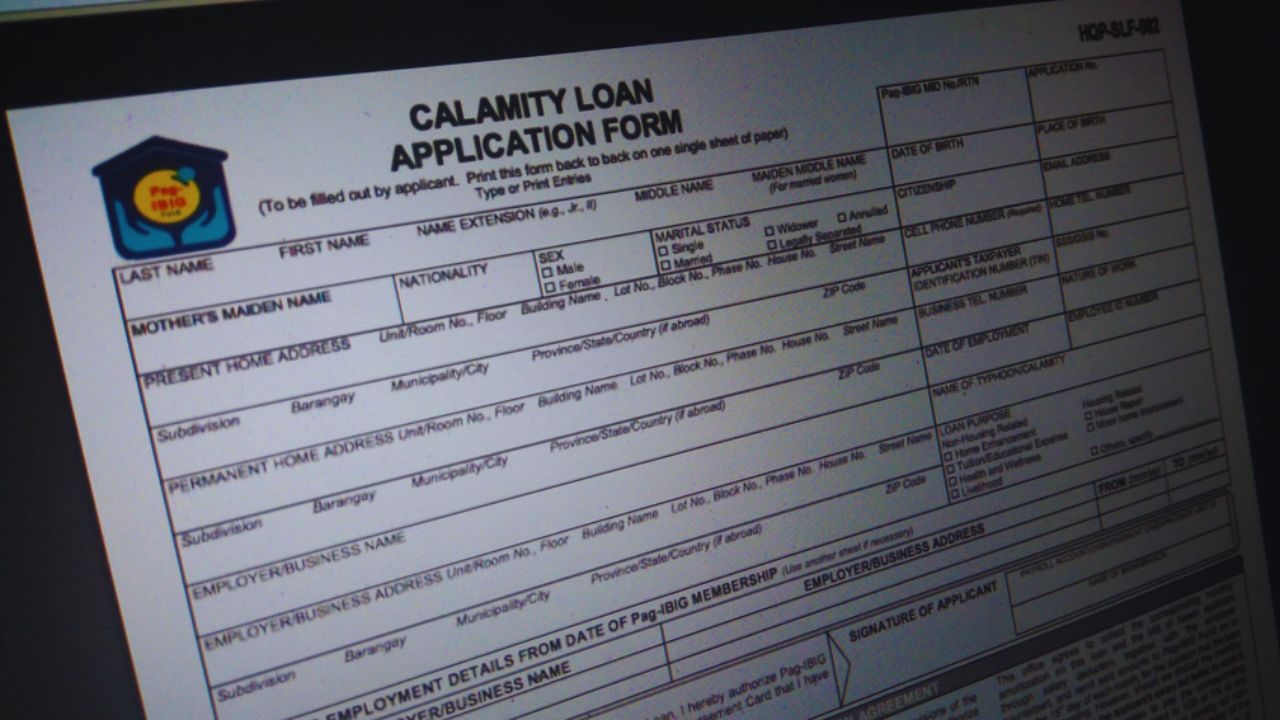
- Accomplished Calamity Loan Application Form (downloadable from the Pag-IBIG website)
- Photocopy of valid ID (with signature)
- Proof of income (payslip or certificate, if applicable)
- Proof of residence in the calamity-affected area (utility bill or barangay certificate)
Submit Application
You can submit your application through:
- Any Pag-IBIG branch—optionally with a representative, if you’re unable to visit in person
- Online, via the Virtual Pag-IBIG portal, which offers electronic forms and document uploads
- Employer coordination, for companies assisting affected employees in bulk
Some people worry that, in the chaos following a disaster, application turnarounds might be slow.
In reality, Pag-IBIG has streamlined procedures—particularly during widespread calamity declarations. Still, actual processing times can vary by location and volume of applicants.
Wait for Approval and Fund Release
If approved, funds are typically released through your Pag-IBIG Loyalty Card Plus, a LandBank cash card, or via check. Recent experience suggests that, for online and properly documented cases, funds are credited within five working days.
With manual, in-person applications, the timeframe could extend slightly, but rarely more than two weeks unless there are missing requirements.
Uses of the Calamity Loan: What Expenses Can It Cover?
The Pag-IBIG calamity loan is intentionally flexible in its allowable expenses. The primary goal is to help restore basic living conditions and support urgent family needs.
- Immediate repairs to damaged homes or property
- Purchase of food, drinking water, medicine, or baby essentials
- Temporary relocation or rent
- Transportation for affected family members
- Replacement of appliances or school supplies
Anecdotally, some members report using the loan even for communication (like mobile top-ups) to stay in touch during post-disaster recovery.
There’s seldom a strict audit, but the spirit is to keep spending aligned with recovery, not luxury or unrelated purchases.
Frequently Overlooked Points and Common Misconceptions
The calamity loan is sometimes misunderstood. Some believe it’s a grant or doesn’t require repayment.
But, this is an actual loan, with a legally binding contract. Failure to pay on time may affect credit standing with Pag-IBIG and limit access to other programs.
Another misconception is that only homeowners can apply. In reality, renters and even boarders in calamity-hit areas can be eligible as long as their residence and contributions are verifiable.
Missing a few monthly savings doesn’t always disqualify either—it’s advisable to talk to Pag-IBIG staff, since short-term lapses may be correctable, especially after a major disaster.
Comparing Pag-IBIG Calamity Loan with Other Emergency Credit Options
Why Consider Pag-IBIG Over Private Lenders?
One strong point of the Pag-IBIG calamity loan is its relatively low cost and accessibility.
Compared to typical private lenders or salary loans—where rates may top 20% per year—the difference is substantial. Moreover, no collateral is required, and processing usually favors those already in the system.
Other Government Emergency Loan Alternatives
The Social Security System (SSS) and Government Service Insurance System (GSIS) both maintain their own calamity loan programs.
These can offer similar or sometimes higher amounts, but eligibility is closely tied to current status with those agencies. For many, Pag-IBIG remains easiest to access, especially for private sector workers and self-employed individuals.
Legal, Tax, and Compliance Considerations
Pag-IBIG calamity loans are not subject to value-added tax (VAT) or other direct taxes. They don’t count as income or create any additional reporting duties on your tax returns.
However, applicants must be mindful to provide authentic, updated information during their application.
Submission of fraudulent papers or misrepresentation risks permanent disqualification from Pag-IBIG programs and possible legal action. That’s a point not everyone realizes up front.
Conclusion
Learn how the Pag-IBIG Calamity Loan works in the Philippines, understand eligibility, application steps, and repayment terms, and see who can benefit from emergency cash assistance during disasters.
Note: There are risks involved when applying for and using credit. Consult the bank’s terms and conditions page for more information.