Securing the right auto loan in the Philippines can make owning a car more accessible and less stressful. Whether you’re a first-time car buyer or considering an upgrade, understanding your financing choices helps you make an informed decision.
Vehicle financing is a practical path for those seeking flexibility and manageable payments.


This guide is designed for anyone curious about car loans in the Philippines—from young professionals to business owners. It explores available options and their key details, so you can weigh choices based on your needs.
At the end, you’ll find useful insights to identify opportunities and avoid common pitfalls while financing a new or used vehicle.
Why Vehicle Financing Is Popular in the Philippines
There are several reasons why Filipinos frequently consider auto loans as their preferred payment method. Let’s look at what drives this trend—and perhaps why it’s worth considering.
Managing Upfront Costs
Buying a car outright in cash is a significant financial undertaking for most people. Financing allows buyers to spread out payments, making car ownership more accessible even for those without lump-sum savings.
Honestly, spreading costs has its relieving aspects. It feels less overwhelming than saving for years.
Access to a Wider Selection
With an auto loan, buyers often have more options—from entry-level sedans to SUVs or vans. Without huge upfront payments, exploring models otherwise out of reach seems a little more realistic for many buyers.
Flexible Repayment Terms
Financial institutions in the Philippines offer a range of loan terms, typically stretching from 12 months up to 60 months. While longer terms mean smaller monthly payments, shorter terms reduce overall interest—although balancing both can be tricky.
Building Credit History
Paying off a car loan can help establish or improve credit scores, which is crucial if you anticipate future financing needs. Of course, that only holds if payments are made on time.
Main Types of Auto Loans Available
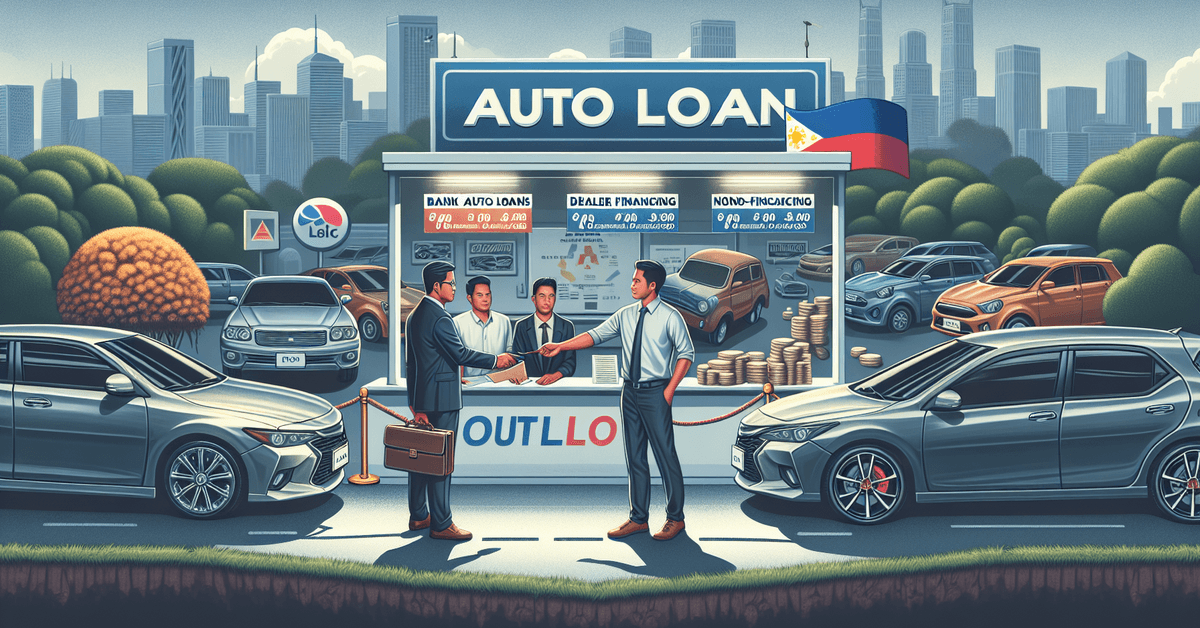
Exploring different vehicle financing products is a smart starting point. Although the offers share some similarities, they also have key contrasts that affect your decision.
Bank Auto Loans
Major banks in the Philippines, such as BPI, Metrobank, and BDO, are among the most well-known vehicle financing providers. They serve both brand-new and pre-owned car buyers.
Typically, these banks offer competitive interest rates, transparent fees, and reliable after-sales service. Documentation and approval times, however, can be a concern— sometimes stretching longer than expected.
Dealer Financing
Many car dealerships provide in-house or partnered financing solutions. Arranging a loan directly at the dealership is often convenient, especially for buyers eager to drive away quickly.
Little things like bundled freebies can sweeten the deal, although interest rates might occasionally be a bit higher.
Non-Bank Financial Institutions (NBFIs)
Some companies specialize in auto financing without offering traditional banking services.
These NBFIs provide flexible options, especially for buyers with less conventional credit backgrounds. Their documentation is usually less strict, though higher costs may be a trade-off.
How Interest Rates and Terms Compare
Comparing rates and terms across lenders isn’t always straightforward. Each provider has nuances—some publish rates openly, others require inquiries. Rates generally depend on loan amount, vehicle type, and credit history.
Bank Loan Rates
Philippine banks often offer annual rates around 4% to 8% for new cars, but rates vary. For used cars, rates may be slightly higher—sometimes by 1-2 percentage points. Special promos occasionally arise during car shows or online campaigns.
Dealer and NBFI Rates
Dealers’ partner financing can run higher than bank-based offers, with rates around 8% to 10%. NBFIs may reach similar or a bit higher, mostly to offset risks associated with borrowers lacking strong credit histories.
Loan Terms and Down Payments
The typical minimum down payment is about 20%, but promotions might drop this to 10% on occasion. Loan terms range from one year to five years. Choosing a longer term reduces monthly dues, but total interest rises.
Essential Requirements for Auto Loans
Application requirements depend on the lender, but documents generally include:
- Completed application form
- Valid government ID
- Proof of income (payslips, COE, or ITR)
- Proof of billing address (such as utility bill)
- Bank statements (sometimes requested by banks)
- BIR/TIN for self-employed applicants
- Additional requirements for OFWs (remittance slips, employer contracts, etc.)
Requirements for used and repossessed cars may differ slightly or have extra steps, such as appraisal or verification of vehicle documents.
Top Philippine Auto Loan Providers to Consider
The list below features notable auto loan providers in the Philippines. Each has its pros and possible downsides, depending on your profile.
BPI Family Auto Loan
BPI is popular for its competitive interest rates and wide dealership partnerships. For buyers eyeing new vehicles and seeking fast pre-approval, this can be an attractive option.
BDO Auto Loan
BDO offers loan products for brand-new and used cars from a vast network of dealers. They’re known for their clear application process, and sometimes there are practical online calculators available to gauge monthly dues.
EastWest Bank
EastWest Bank stands out for flexible terms and easy-to-navigate online applications. Their approval times may feel a bit faster, based on some shared experiences online, though that might differ for each application.
Metrobank Car Loan
Metrobank’s car loans feature both fixed and variable rate options. The process feels straightforward, though document requirements can change over time or depending on the branch.
Security Bank Auto Loan
This lender is recognized for simple digital processes and transparent pricing. It may not offer the widest dealer network, but its transparency and reliable after-sales support are valued by some borrowers.
Non-Bank Institutions
Companies like Radiowealth Finance or Asialink Finance provide alternative routes—sometimes helpful if you’re struggling with strict bank criteria. However, it’s wise to scrutinize their interest rates and contract clauses carefully.
Tips for Getting Approved (and Why Some Applications Fail)
Not every application receives a green light immediately. While that can be discouraging, a bit of preparation improves approval chances.
Maintain Good Credit Standing
Lenders check credit histories before granting auto loans. Unsettled debts or delayed credit card payments can hurt your odds, even if your salary meets the requirements.
Prepare Complete Documentation
Missing or incomplete forms often cause delays or denials. It’s helpful to assemble paperwork in advance and double-check that all requirements are addressed, especially for self-employed or overseas applicants.
Choose the Right Loan Amount
Sometimes, applicants request more than they can realistically afford per month, considering all other expenses. Requesting a manageable sum based on budget projections is generally a safer route.
Understanding Taxes and Additional Fees
Beyond sticker prices, Filipino car buyers face extra costs during and after vehicle purchase. These fees sometimes catch new buyers by surprise.
Common Upfront Fees
- Document Stamp Tax (DST)
- Chattel mortgage fee
- Comprehensive insurance (often required before release)
- Handling and processing charges
Recurring costs—like insurance renewals and annual registration—should also be part of your planning. Not all lenders include these in monthly amortization, so clarifying up front is beneficial.
Frequently Asked Questions (FAQs)
Who can apply for an auto loan in the Philippines?
Typically, any Filipino citizen or resident aged 21 to 65 with stable income can apply. Some banks also allow co-borrowers or joint applications, which may help if single income doesn’t meet their criteria.
Can OFWs get a car loan?
Yes, though requirements differ slightly—such as remittance histories, employment contracts, or special forms. Processing may take longer, but several banks and NBFIs cater to OFW applicants.
What happens if I miss a payment?
Lenders usually charge penalties for late payments, and consistent delays can affect your credit record. In extreme cases, the vehicle may be repossessed.
Is it cheaper to buy a car in cash?
The absence of interest charges makes cash buying less expensive overall. However, cash payments aren’t possible for everyone. The convenience and flexibility of loans outweigh upfront costs for many buyers, despite extra fees.
Can I refinance my existing car loan?
Yes, some lenders allow refinancing, potentially offering lower interest rates or more affordable terms. This may help ease monthly obligations, but it typically resets part of the loan’s remaining period.
Conclusion
Explore top auto loan options in the Philippines to find competitive rates, flexible terms, and trusted lenders, helping you finance your vehicle affordably while managing payments and achieving ownership confidently.
Note: There are risks involved when applying for and using credit. Consult the bank’s terms and conditions page for more information.