
Disposable diapers can cost a considerable amount per month per child, which quickly pressures a tight budget.
The good news is that there are proven ways to get diapers for free or at a much lower cost.



This guide shows you practical options you can start using today, with real programs and resources you can look up and verify yourself.
Start With Diaper Banks and 2-1-1 Hotlines
Diaper banks collect donations and distribute free diapers to families through partner agencies like food pantries, shelters, and social-service organizations.
In the United States, the National Diaper Bank Network coordinates a large number of community-based diaper banks to tackle diaper need.
Most diaper banks limit how many diapers you can get per child per month, but even 40–50 diapers can help reduce your monthly spending.
It is worth checking their schedules, as some operate only on certain days or work through partner organizations rather than direct walk-ins.
To find local help
Call 2-1-1 from your phone (in the U.S.) to ask about diaper assistance programs and other basic-needs help in your area.
Search online for “diaper bank” plus your city or state to find nearby programs and read their eligibility rules.
Visit websites or social pages of well-known diaper banks in your region to understand how they operate and what documents they ask for.
Ask Hospitals, Pediatricians, and Clinics for Samples
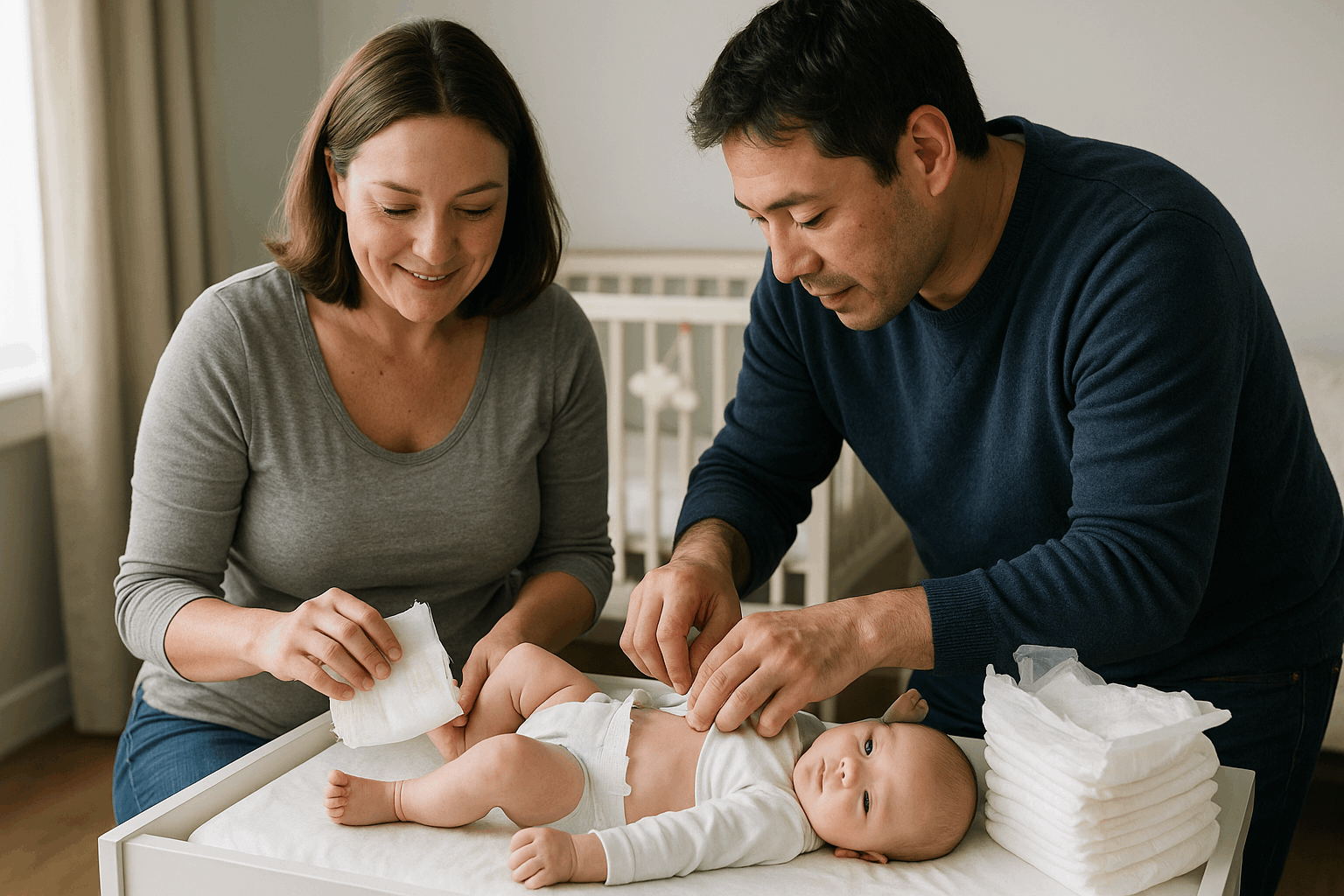
Your health care providers can be a direct source of free diapers.
Many pediatricians, OB/GYN offices, and hospitals keep diaper samples from brands that want parents to try their products.
These samples often sit in storage unless families request them.
You should not feel embarrassed to ask. Health professionals are used to and often prefer to distribute samples rather than let them expire in storage.
How you can use this channel
At your baby’s next checkup, ask directly if the office has any diaper samples or baby freebie packs.
If you are pregnant or have just given birth, request a “new baby pack” before leaving the hospital. Many hospitals give trial-size diapers.
Ask staff if they know about local diaper programs, charity partners, or social workers who can guide you to ongoing assistance.
Use Diaper Brand Rewards, Coupons, and Sample Offers
Major diaper brands run loyalty and rewards programs that can lead to free packs, coupons, or store credit over time.
These are not instant solutions, but they help you reduce your long-term diaper costs.
Pampers Club / Pampers Rewards
You scan codes or QR labels from Pampers products using the Pampers app and earn points or “Pampers Cash.”
Over time, you can redeem these for coupons or rewards that lower the cost of diapers and wipes.
Huggies rewards through shopping apps
Huggies has partnered in recent years with receipt-scanning apps that let you earn points by buying Huggies diapers and wipes.
You then exchange the points for gift cards, which you can use to buy more diapers.
Beyond these programs
Some brands and retailers occasionally offer limited-time sample packs or free trials, often promoted on their websites, newsletters, or social media.
Baby registry platforms and parenting blogs sometimes highlight these offers when they are available.
In many cases you need to buy several packs before you can redeem rewards, so compare whether the savings justify your effort and match your budget.
Join Baby Registries, Store Clubs, and Parenting Programs
Many retailers and brands try to attract new parents with welcome boxes and loyalty clubs that include diaper samples or coupons.
These are usually free if you sign up and, in some cases, place a small order.
Common options include:
- Baby registries from big retailers, which often send a welcome box with trial-size diapers, wipes, and other baby items when you create a registry and meet simple conditions (such as making or receiving a qualifying purchase).
- Drugstore and supermarket parenting clubs, may offer exclusive discounts, extra points on baby products, and occasional free diaper samples as part of their membership benefits.
- Store apps and loyalty cards, which sometimes send targeted digital coupons for free or heavily discounted diapers to members, especially new parents.
Look for Community Groups, Buy Nothing Networks, and Freecycle
Buy Nothing groups on social media, where neighbors give items away at no cost. Baby items, including diapers, appear frequently in these groups.
Freecycle or local “free stuff” groups, where people post items they want to give away instead of throwing them out.
Community centers, churches, mosques, and other faith-based organizations that run clothing closets or basic-needs pantries.
When you receive diapers through these networks, check that unopened packs are sealed and stored properly.
Understand What Government Programs Can and Cannot Do
Cash-assistance programs like TANF can be used to buy diapers, but the amount is limited and often must cover many other urgent household needs.
Some states, provinces, or municipalities are experimenting with diaper assistance programs or funding for diaper banks.
These initiatives may provide newborn families with a limited monthly supply of diapers or support local organizations that distribute them.
Because rules and benefits vary by region, you should check your local government website, talk to social workers, or contact community organizations.
Extra Strategies to Stretch Your Diaper Budget
Alongside free sources, you can take simple steps to reduce how much you pay for diapers overall.
Small changes can help prevent waste and keep your baby comfortable.
You can:
- Compare unit prices by looking at the cost per diaper instead of just the total pack price. Larger packs are not always cheaper per diaper, so check the label.
- Consider trying store-brand diapers if your baby’s skin tolerates them well; they are often more affordable than premium brands.
- Use cloth diapers part-time if you have access to a washing machine and can handle the extra laundry. Even using cloth at home and disposables outside can reduce the number of disposable diapers you need.
- Avoid keeping a single diaper on for far too long just to save money. Overused diapers can cause rashes and infections, which may lead to discomfort for your baby and higher medical costs.
If you still struggle month after month, even after trying these strategies, contact a local diaper bank or social-service agency again.
Many programs understand that diaper need can be ongoing and allow repeated support, within their rules and capacity.
Conclusion: Build Your Own Diaper Support Plan
Finding free diapers takes some planning, but you have several realistic options.
Your next step is to choose two or three options from this guide and act on them this week.
Over time, these steps can ease the financial pressure and help you keep your baby clean, dry, and comfortable.