Exploring how you access your PayPal funds can lead to questions about these two popular cards. This article examines the PayPal Debit Card and PayPal Mastercard , focusing on their features, unique perks, and potential drawbacks.
The aim is to help you understand what truly makes them distinct, so you can use your PayPal account efficiently, whether you shop in-store, online, or need quick cash access.

This article is designed specifically for PayPal users, small business owners, gig workers, freelancers, and those who want flexibility when spending online payments.
By the end, you'll have a clear sense of which card might align with your lifestyle and financial needs, without any unnecessary complexity.
Understanding PayPal's Card Options
PayPal offers several cards aimed at different types of users. Many people recognize the PayPal Debit Card and the PayPal Cashback Mastercard as popular choices, though sometimes their features seem to blur together.
Still, each card has a distinct purpose and offers varying benefits for personal and business use.
What Is the PayPal Debit Card?
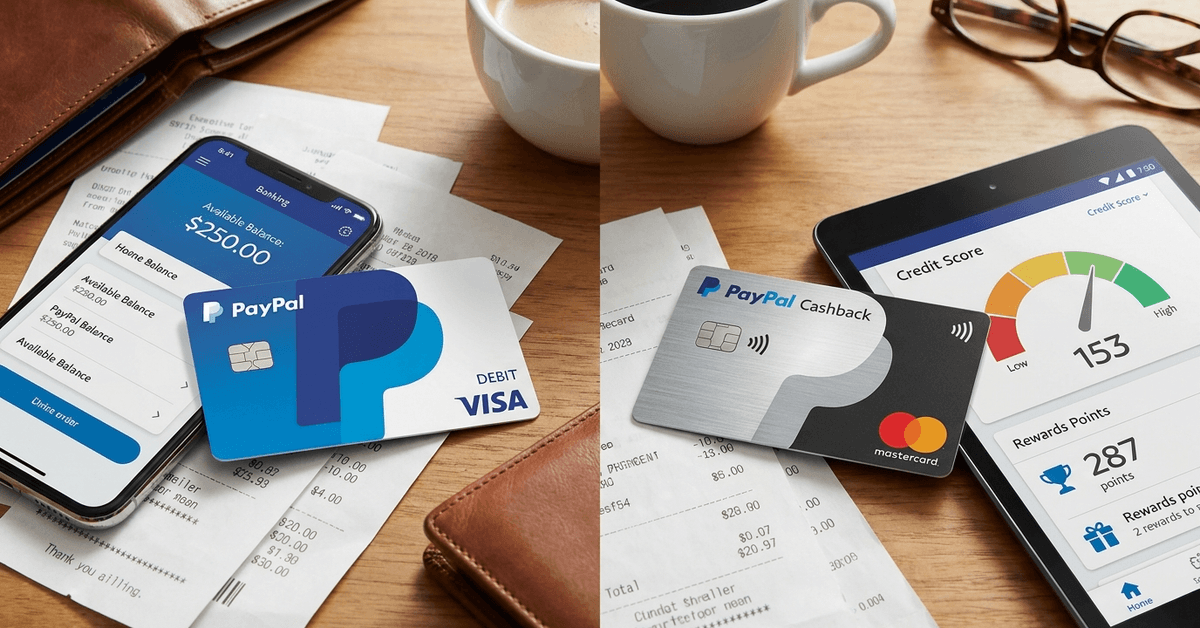
The PayPal Debit Card is directly linked to your PayPal balance. This allows you to use funds in your account to make purchases anywhere Mastercard is accepted.
It acts much like a checking account debit card, offering convenience for those who frequently receive payments via PayPal, including gig workers and online sellers.
This card doesn't rely on approved credit. Instead, it simply draws from whatever is available in your PayPal balance.
For those seeking to use funds immediately without waiting for bank transfers, this rapid access can be ideal, especially in fast-paced e-commerce environments.
Key Features of the PayPal Debit Card
- No annual fees are associated with the card's usage.
- Free cash withdrawals at MoneyPass ATMs, adding flexibility for cash needs.
- Ability to earn a small cashback (currently 1%) at eligible stores, though this sometimes only applies to select transactions.
- No credit check is required for approval.
- Instant access to available PayPal funds for in-store and online shopping.
- The card may also be called the "PayPal Cash Card" in some regions.
What Is the PayPal Mastercard?
The PayPal Mastercard comes in two main forms: the PayPal Cashback Mastercard and the PayPal Extras Mastercard.
Both operate as true credit cards, meaning purchases don't draw from your PayPal balance, but rather from the card’s line of credit. Cardholders must apply with a credit check, and approval isn't guaranteed for everyone.
The PayPal Cashback Mastercard emphasizes rewards, especially on PayPal purchases, while the Extras version offers points for various spending categories.
These cards cater to those who want credit-building potential or significant rewards from their regular purchases.
Main Features of PayPal Mastercard Credit Cards
- The PayPal Cashback Mastercard offers 2% cash back on all eligible purchases, redeemable to your PayPal account.
- The PayPal Extras Mastercard lets you earn points toward gift cards, travel, and other rewards for spending in select categories.
- Unlike the Debit Card, Mastercard credit cards require a credit application and approval.
- Cardholders can use their cards worldwide, wherever Mastercard is accepted.
- Accounts can be easily managed through your PayPal dashboard.
- Balances are not automatically paid from your PayPal funds—you receive monthly statements and must pay at least a minimum due.
Comparing PayPal Debit Card vs PayPal Mastercard
At first glance, these cards may seem similar, but their differences are significant for the average PayPal user.
The Debit Card offers immediate access to your PayPal balance, perfect for those prioritizing instant liquidity.
Conversely, the Mastercard family introduces credit, rewards programs, and responsibility—each suited to different personal finance habits.
Funding Source and Access
PayPal Debit Card: Uses only your PayPal balance, with no borrowing feature and no access to external credit lines. Spending is limited to what you have available, so it can be a way to manage money carefully without risk of overspending.
PayPal Mastercard: Operates as a regular credit card, not directly linked to your PayPal funds when making purchases. You can choose to settle bills with your PayPal account, but purchases increase your card’s balance, not your PayPal balance.
Credit Building and Application
PayPal Debit Card: No credit check or history is required to obtain this card. It won’t help you build your credit score, which may be a drawback for those hoping to improve their credit profile.
PayPal Mastercard: Requires a formal credit application. Activity is reported to credit bureaus, giving an opportunity for careful users to build or improve their credit scores over time, though that can cut both ways if payments are missed.
Rewards and Benefits
PayPal Debit Card: Offers a basic cashback rate on qualifying purchases, usually 1%. The simplicity appeals to users who prefer straightforward earning with few requirements, but the reward rate doesn’t match many credit card options.
PayPal Mastercard: The Cashback version gives 2% cash back on every eligible purchase, directly deposited to your PayPal account. This higher rate is a draw for regular spenders. The Extras version lets you redeem points for various rewards, providing more flexibility, but perhaps creating choice fatigue in some users. You might end up preferring the consistency of flat-rate cash back.
ATM and Cash Access
PayPal Debit Card: Withdraw cash seamlessly at MoneyPass ATMs for free. But using out-of-network ATMs may incur fees. This convenience is crucial if you regularly need to convert digital funds into physical cash.
PayPal Mastercard: Cash advance is available, but often comes with higher fees and immediate interest accrual. This makes it less appealing for those seeking quick cash; the process may also be a bit more complex than with debit cards.
Pros and Cons Table
| Feature | PayPal Debit Card | PayPal Mastercard |
|---|---|---|
| Approval Method | No credit check | Credit check required |
| Spending Limit | Balance on hand | Credit line |
| Rewards | 1% cashback, some restrictions | 2% cashback or points |
| Cash Access | Free at MoneyPass ATMs | Cash advance (fees apply) |
| Credit Building | No | Yes |
| Annual Fee | None | None |
| Use Cases | Instant liquidity | Rewards, credit access |
Security and Card Protections
Both cards come with zero liability protection for unauthorized transactions, providing peace of mind for users. Managing your cards via the PayPal app or site allows you to freeze a lost card quickly, add alerts, and monitor new purchases.
For those curious about more official details, PayPal provides up-to-date information in their official Debit Card overview and a full FAQ on its Cashback Mastercard page.
Common Use Cases for Each Card
When the PayPal Debit Card Makes Sense
- If you are paid regularly via PayPal for online sales, gig work, or freelancing
- Needing to access funds immediately, without extra transfers
- No desire—or no need—to use credit or build a credit history
- Sometimes, for better control over spending without risk of debt accumulation
Where the PayPal Mastercard Excels
- Looking for a simple way to earn higher cash back or points, especially with PayPal purchases
- Comfortable managing credit (paying off balances monthly)
- Interested in building or improving a credit profile through responsible usage
- Prefer to keep personal and business transactions separate, or want extra protection for larger purchases
Considerations Before Choosing a Card
It’s useful to pause and reflect on how you typically get paid, your cash flow needs, and how you spend money most months. If you want to avoid debt entirely, sticking with a debit card sometimes feels safest, even at the cost of fewer rewards.
If, on the other hand, you spend enough for cash back to add up—and are confident you’d avoid interest charges—the Mastercard might make better sense. There’s always a risk of forgetting a payment, though, and the flexibility of credit brings possible pitfalls along with extra perks.
For small business owners, separating spending through two cards might actually simplify bookkeeping, but there’s no single answer that suits every situation. Personal preference plays a bigger role than most guides suggest.
Which PayPal Card Is Truly Different?
For many users, the PayPal Debit Card and PayPal Mastercard serve fundamentally different purposes. One gives you instant access to your balance, without added risk.
The other brings potential rewards, credit-building, and flexible payments—but may tempt some users into overspending. Ultimately, the best card is the one that fits your habits, priorities, and comfort with credit.
There’s no universal right answer, though based on how often you use PayPal, the decision may feel easier than you first thought. Hopefully, this detailed look sharpens your view and supports your next financial move.